- Parking regulations for motorhomes in Pembrokeshire
- Wild camping
- Motorhome driving rules in Wales
- Navigating narrow country roads along the Pembrokeshire coast
- Motorhome height and weight restrictions
- Pembrokeshire Coast National Park etiquette
- Recommended scenic routes along the Pembrokeshire coast
In this article
-
 Never miss an offer again
Sign up to receive the Continental Leisure newsletter, be the first to see offers and discounts.
Blog
Rules and Regulations for Motorhome Parking and Driving Along the Pembrokeshire Coast
Posted: 16th May 2025 (Last updated 3 months ago) Written By Iwan LewisThe stunning south-west coast of Wales, otherwise known as the Pembrokeshire Coast, is a very popular destination for motorhome enthusiasts. It offers plenty of scenic drives and an outstanding blend of rugged coastline and charming seaside towns. However, driving, and parking, a motorhome in this ecologically sensitive region requires awareness of local rules and etiquette.
This edition of the Continental blog features a comprehensive guide on motorhome parking, overnight stays, road rules and respectful practices. Whether you’re travelling in a new or used model, and whether you’re an experienced motorhomer or planning your first journey through the Pembrokeshire Coast National Park, understanding the regulations will ensure a smooth and enjoyable trip.
Motorhome travellers must stick to specific parking rules in Pembrokeshire. This is particularly due to the area’s popularity and its environmental protections.
Council-managed car parks: Pembrokeshire County Council allows motorhome parking in many of its managed car parks, but there are certain stipulations. If your motorhome is large enough to occupy more than one space, you must buy additional tickets to cover all the spaces used (ie. each ticket is for a single parking space used, not for one vehicle). In some car parks there are extended bays, so there are specific motorhome tariffs. Sleeping, cooking and camping overnight in council car parks is generally not allowed (unless explicitly stated otherwise).
Wild camping is illegal across all of Wales, including Pembrokeshire. This means that parking your motorhome overnight on roadsides, lay-bys or beaches without permission is totally against the law. This regulation is strictly enforced, especially within the Pembrokeshire Coast National Park. Illegal overnight stays can lead to:
- Fixed penalty notices
- Fines
- Orders to move immediately
According to the Pembrokeshire Coast National Park Authority (the official body set up to protect the natural beauty of the park and help visitors to enjoy and understand it), enforcement officers regularly patrol those areas that are prone to illegal overnight parking. Motorhome travellers are strongly advised against illegal overnight parking and encourage to use approved campsites.
In 2023, Wales introduced a nationwide reduction of speed limits in residential areas.
- 20 mph in built-up or residential areas (default limit)
- 30 mph or more on main roads (depending on local signage)
- You should make sure you watch out for signs detailing speed limits, especially when you’re transitioning from a town road to a rural road, and vice versa.
The infrastructure of Pembrokeshire includes older bridges and rural roads that were not designed for modern heavy vehicles. Ignoring these factors could result in damage to both infrastructure and your vehicle – as well as, in some cases, legal repercussions.
- Check for signage: Height restrictions are commonly posted near bridges and tunnels.
- Vehicle dimensions: Before departure, confirm your vehicle’s dimensions (ie. height, width and weight).
- Plan routes accordingly: Avoid routes containing low clearance bridges and weight-restricted roads (use a motorhome-compatible route planner).
The Pembrokeshire Coast National Park is one of the most environmentally sensitive areas in Wales, in fact in the whole UK. As a motorhome traveller, your behaviour plays a significant role in preserving its natural beauty for future visitors. Sticking to the following principles of etiquette protects the environment and helps maintain positive relations between motorhome travellers and local communities.
- Leave no trace: Always operate by the policy of leaving no trace. Take all litter with you, including biodegradable waste.
- No fires or BBQs: These are often prohibited due to fire risk.
- Only use designated facilities: Avoid emptying your motorhome’s waste tanks or grey water in unauthorised locations.
- Noise: Keep noise to a minimum, especially at night or when you are in or near residential areas.
- Paved roads: Stay on paved roads and do not drive your motorhome onto grassy areas or sand dunes.
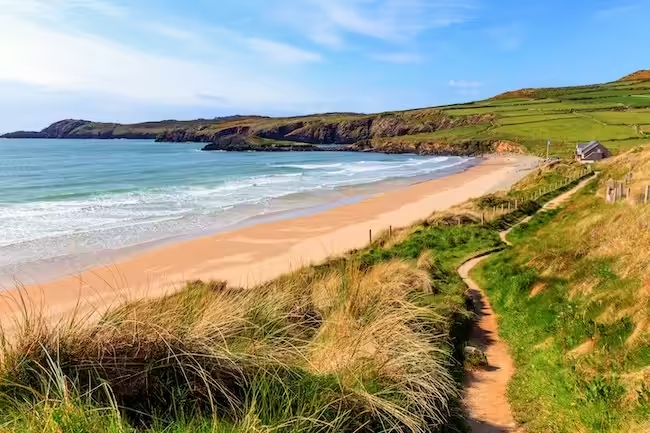
There are some fantastic places all along the Pembrokeshire coast, well worth stopping off to savour. There are numerous lay-bys for extremely picturesque photo stops – you’ll be filling your Instagram grid in no time!
A487 coastal drive: Running from St Davids to Fishguard, this stretch offers breathtaking cliff-top views, access to secluded beaches, and picturesque villages including Solva and Porthgain.
Cleddau Bridge to Angle Peninsula: This southern route is less busy but rich in coastal views. Highlights include Freshwater West beach (one of the top surfing locations in Wales) and Angle Bay (a huge stretch of golden sand at the mouth of the Milford Haven estuary), plus the historic Stackpole Estate (a listed designed landscape and an internationally important nature reserve).
St Davids Loop: A circular drive starting and ending in the St Davids (the smallest city in Britain), which takes in Whitesands Bay and Ramsey Sound (a dynamic stretch of water rich in historic and wildlife features).
Buying a Motorhome for Your Pembrokeshire Adventure
If the thought of a road trip along the Pembrokeshire coast appeals to you, explore our latest motorhome stock. Whether you’re after a more compact model for a cosy or romantic journey, or a larger and more luxurious edition, there are new and used motorhomes to suit every budget here at Continental. Once you’re out there on the road, by staying informed and following the advice in this blog, you can enjoy everything that this motorhome-friendly area has to offer.
Tags:

-
Never miss an offer again
Sign up to receive the Continental Leisure newsletter, be the first to see offers and discounts.